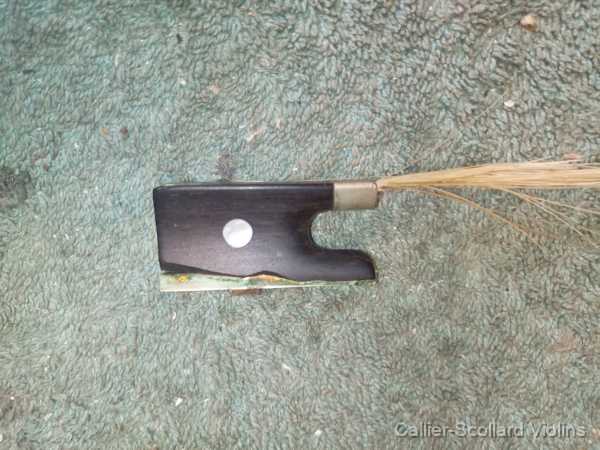
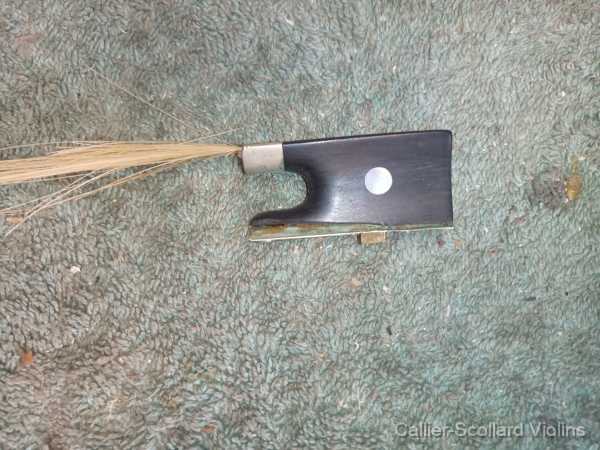
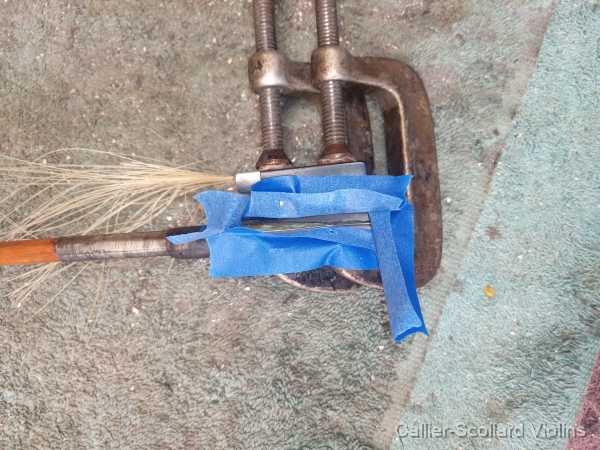
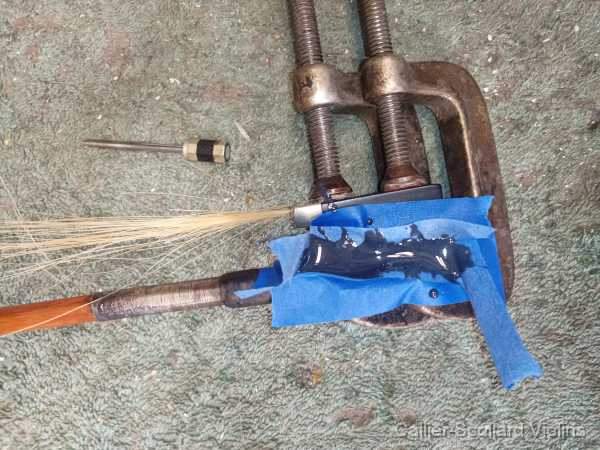
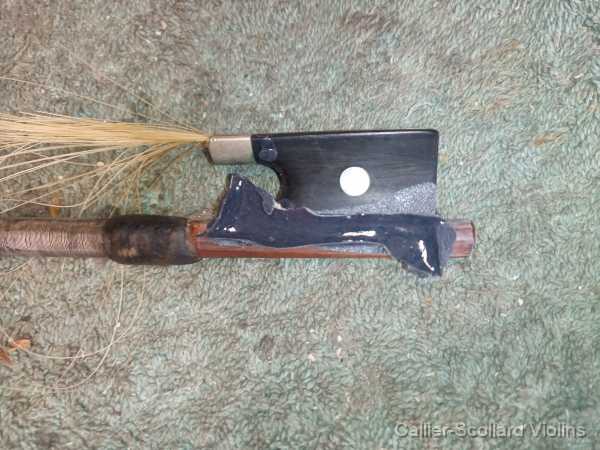
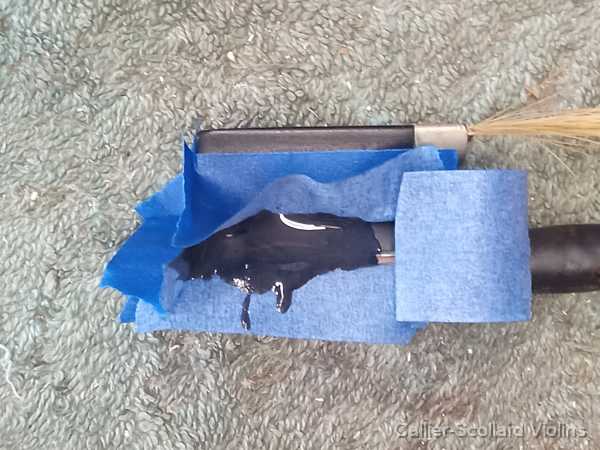
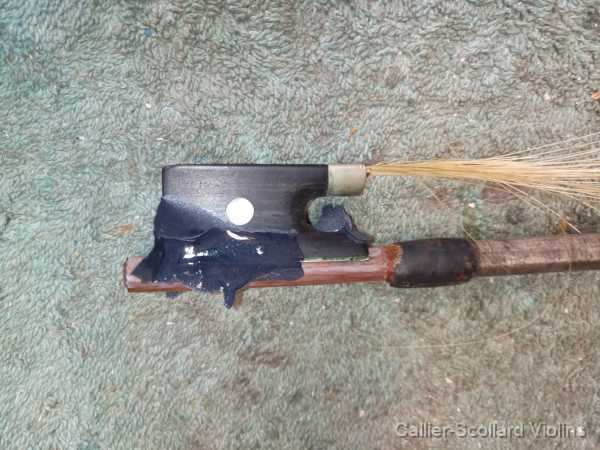
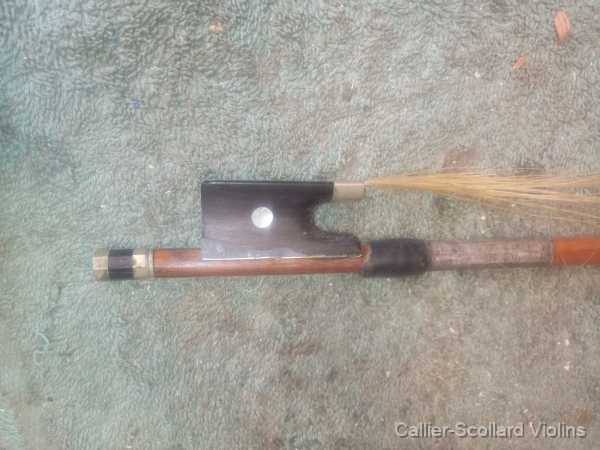
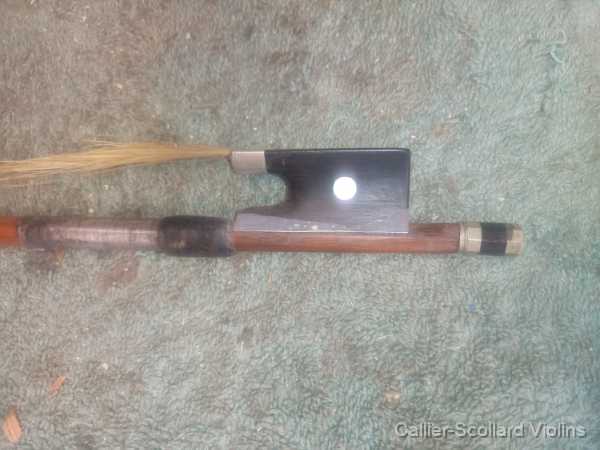
This violin bow came into the shop with both edges of the frog broken away and the metal underslide bent out of shape. Before rebuilding the missing areas, I carefully cleaned the damaged sections and straightened the underslide. The bow stick was then protected with clear tape, and the frog was clamped securely in position to provide a guide for restoring its original shape. Using a temporary dam to contain the repair material, I rebuilt each broken edge separately with a filler material. Once the filler had hardened, the excess was carefully trimmed with a knife and gouge, and both repaired edges were shaped and smoothed to blend with the original frog.
Clean the Broken Edges: Carefully remove any loose material and clean the damaged areas of the frog in preparation for rebuilding the missing edges.
Straighten the Underslide: Carefully straighten the bent metal underslide so it returns to its proper shape and position against the bow stick.
Protect the Stick: Apply clear tape to the bow stick beneath the damaged areas, then carefully trim the tape to provide protection while forming the new edges.
Clamp the Frog: Position the frog on the protected stick and clamp it firmly in place to help establish the correct shape of the missing edges.
Make a Temporary Dam: Create a small dam around the first broken area to contain the filler material while it hardens.
Rebuild the First Edge: Carefully fill the damaged area with the custom repair material, allowing it to form the missing portion of the frog.
Rebuild the Opposite Edge: Repeat the same molding and filling procedure on the other side of the frog.
Trim the Excess Filler: Once the filler has hardened, carefully remove the excess material using a knife and gouge.
Finish Shaping the Edges: Carefully shape and smooth both reconstructed edges, blending the new material into the original frog and restoring its proper outline.